
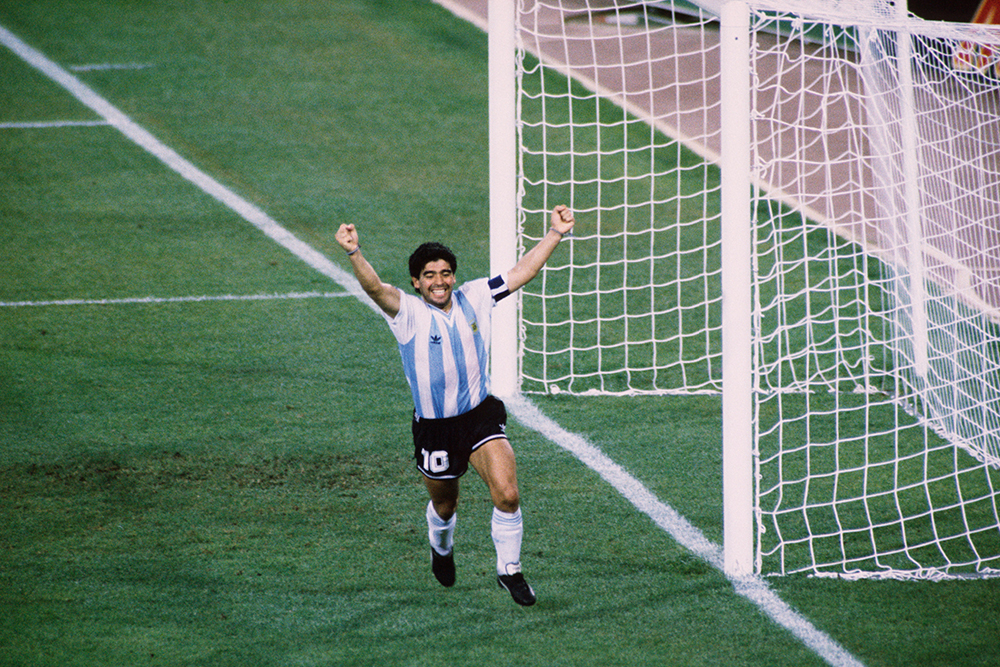





Since 1930, the FIFA World Cup has brought together some of the greatest players, teams, and moments in sports history.
Every tournament has created unforgettable scenes — dramatic goals, emotional celebrations, passionate fans, and iconic matches watched around the world. Over the decades, the World Cup has grown from a small international competition into the biggest soccer event on the planet.
These archive photographs capture the history of the FIFA World Cup through different eras, preserving the atmosphere and emotion of soccer’s greatest stage.
Table of Contents
World Cup: The Beginnings
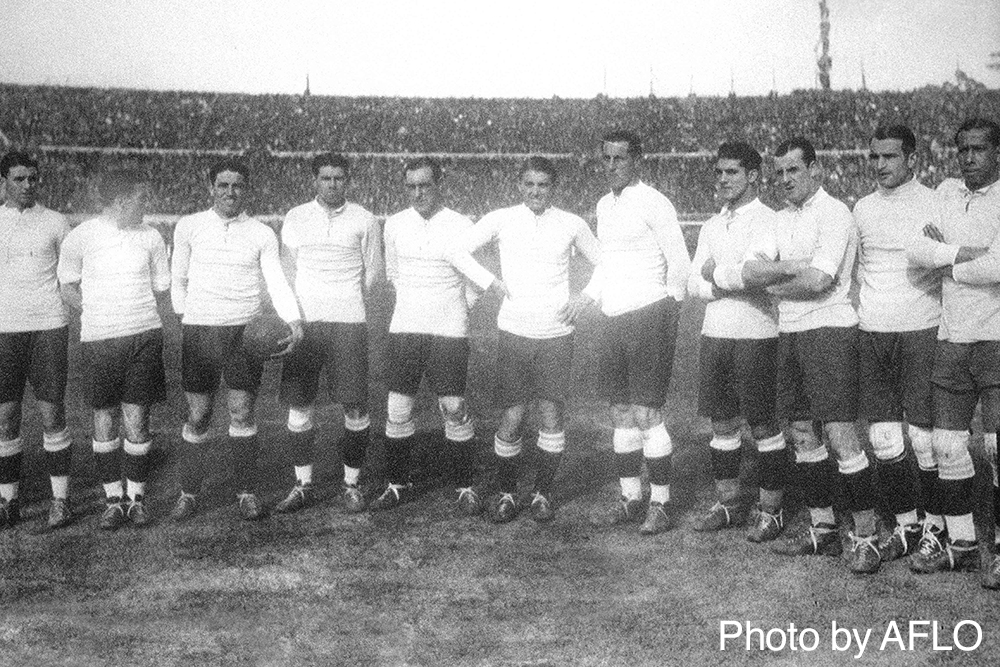
Uruguay team group line up, July 30, 1930. (Photo by AFLO)
The first FIFA World Cup took place in Uruguay in 1930, marking the beginning of what would become the world’s biggest football tournament.
Only 13 teams took part in the competition, with most European nations facing long and difficult journeys by ship to reach South America. Uruguay was chosen as the host nation after winning two Olympic football gold medals in the 1920s and because the country was celebrating the centenary of its constitution.
Matches were played in Montevideo, including the final at the newly built Estadio Centenario, which became one of the most famous stadiums in football history.
Uruguay defeated Argentina 4–2 in the final in front of a crowd of nearly 70,000 people, becoming the first World Cup champions. Archive photographs from the tournament show packed terraces, vintage football kits, early international teams, and the atmosphere of a competition that was still discovering what the World Cup could become.
Even in its earliest form, the tournament already carried the excitement, national pride, and emotion that continue to define the FIFA World Cup today.
Brazil, Pelé, and the Rise of Soccer Legends
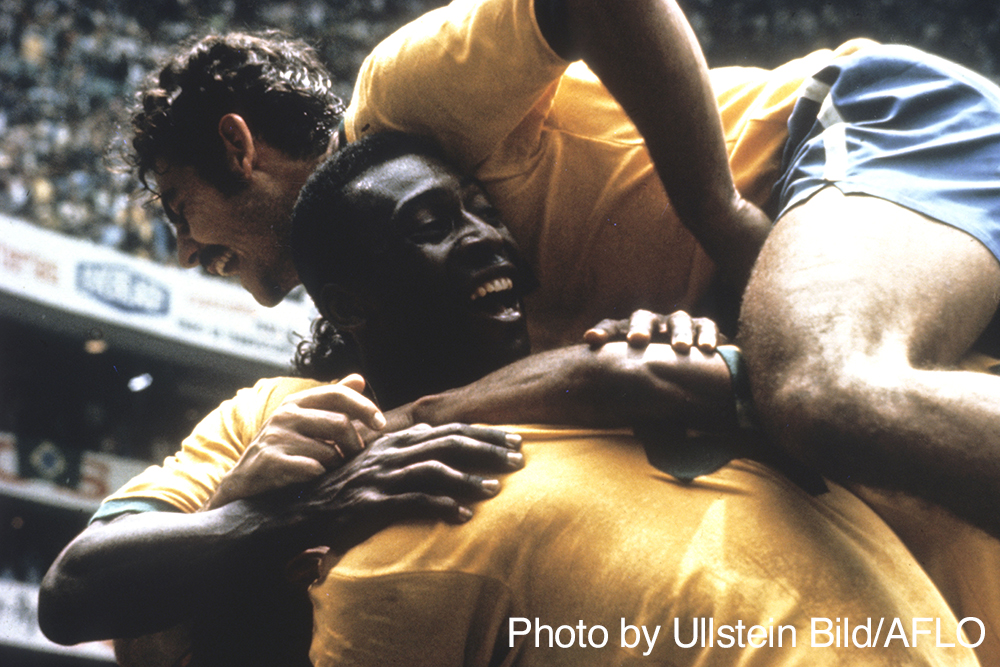
Pelé celebrates during the final match between Brazil 4-1 Italy at Estadio Azteca in Mexico City, June 21, 1970. (Photo by Ullstein Bild/AFLO)
During the 1950s and 1960s, the World Cup entered a new era.
Brazil became one of the most successful and exciting national teams in soccer history, and Pelé became the sport’s first truly global superstar. His performances at the 1958, 1962, and 1970 World Cups helped turn soccer into an international phenomenon.
The 1970 World Cup in Mexico is still remembered as one of the greatest tournaments ever played.
For many fans, it was the first time they experienced the World Cup in color on television. Images from that tournament — Brazil lifting the trophy, fans celebrating in packed stadiums, and Pelé surrounded by teammates — became some of the most iconic sports photographs ever taken.
The World Cup was no longer just a soccer tournament. It had become a worldwide cultural event.
Soccer Becomes a Global Spectacle
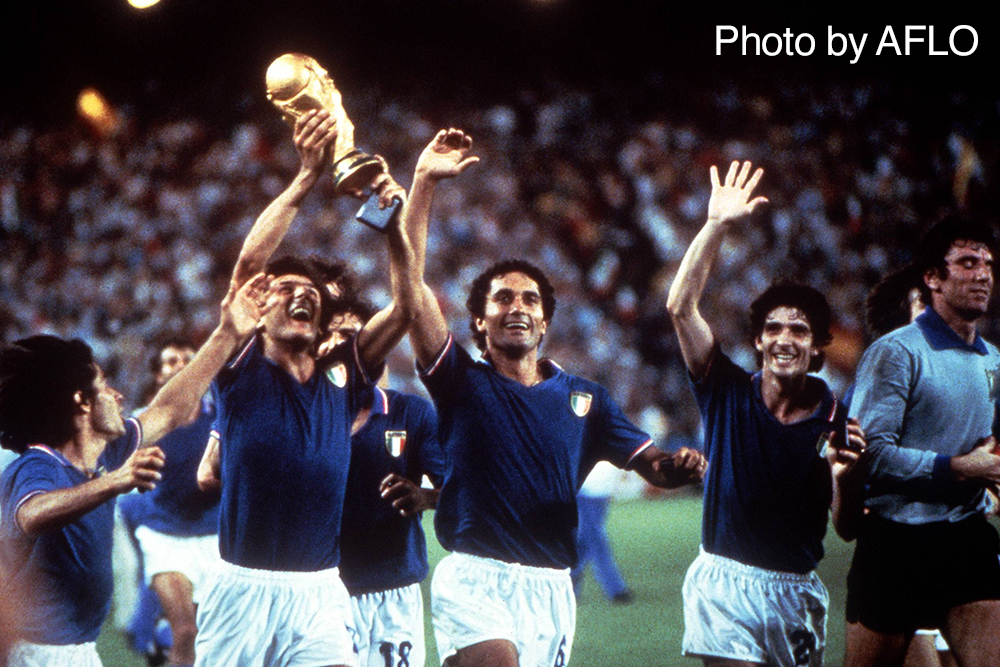
Italy team celebrating after winning the 1982 World Cup final against West Germany, July 11, 1982. (Photo by AFLO)
By the 1970s and 1980s, the FIFA World Cup had become one of the biggest sporting events in the world.
Countries from every continent competed on the global stage, while players like Johan Cruyff, Franz Beckenbauer, and Michel Platini became international stars.
The atmosphere around the tournament also changed dramatically.
Stadiums became larger, crowds became louder, and television audiences grew into hundreds of millions. Fans traveled across the world to support their national teams, filling stadiums with flags, banners, songs, and color.
Archive images from this period capture the energy of soccer during a time when the World Cup became deeply connected to national identity and global culture.
Mexico 1986 and the Maradona Era
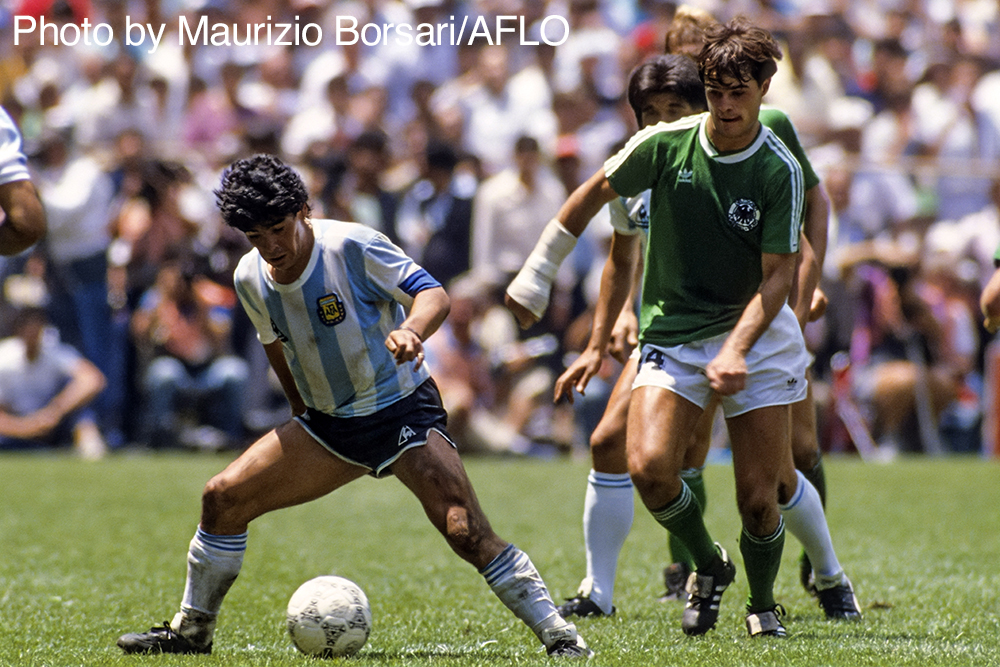
Diego Armando Maradona (Argentina) and Thomas Berthold (West Germany) during the Final match between Argentina 3-2 Germany at Azteca Stadium on June 29, 1986. (Photo by Maurizio Borsari/AFLO)
One of the most famous tournaments in soccer history took place in Mexico in 1986.
That World Cup is remembered mainly for Diego Maradona and his extraordinary performances for Argentina. His famous “Hand of God” goal and his incredible solo run against England became defining moments in soccer history.
Photographs from the tournament capture both the brilliance and emotion of the competition.
Maradona lifting the trophy, emotional celebrations from Argentine fans, packed stadiums in Mexico, and dramatic match moments helped define the visual identity of the 1986 World Cup.
Even today, many soccer fans still consider it one of the greatest tournaments ever played.
The World Cup in the 1990s
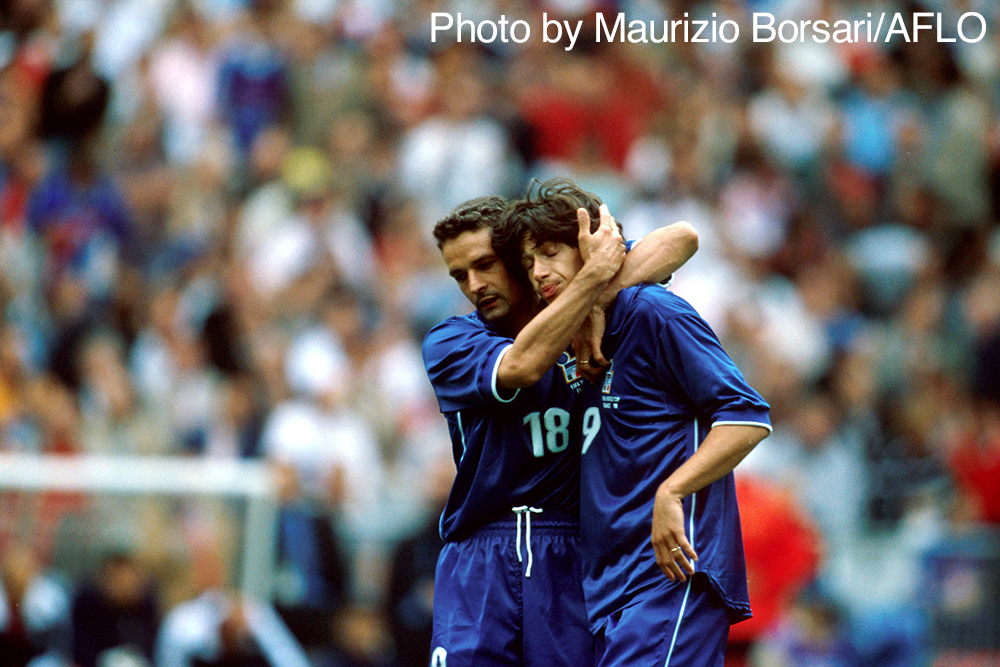
Roberto Baggio consoles Demetrio Albertini after the penalty kick failed in the penalty shootout. July 3, 1998. (Photo by Maurizio Borsari/AFLO)
The 1990s changed soccer forever.
Television coverage expanded rapidly, players became global celebrities, and the FIFA World Cup reached larger audiences than ever before. Tournaments like USA 1994 and France 1998 helped introduce soccer to new generations of fans around the world.
This era also produced some unforgettable players and moments.
Roberto Baggio’s emotional penalty miss in 1994, Ronaldo’s rise as Brazil’s new superstar, and France winning the 1998 World Cup on home soil became major moments in soccer history.
Archive photographs from the 1990s capture colorful stadiums, emotional finals, passionate supporters, and the growing scale of the modern World Cup.
Japan, Korea, and the 2002 FIFA World Cup
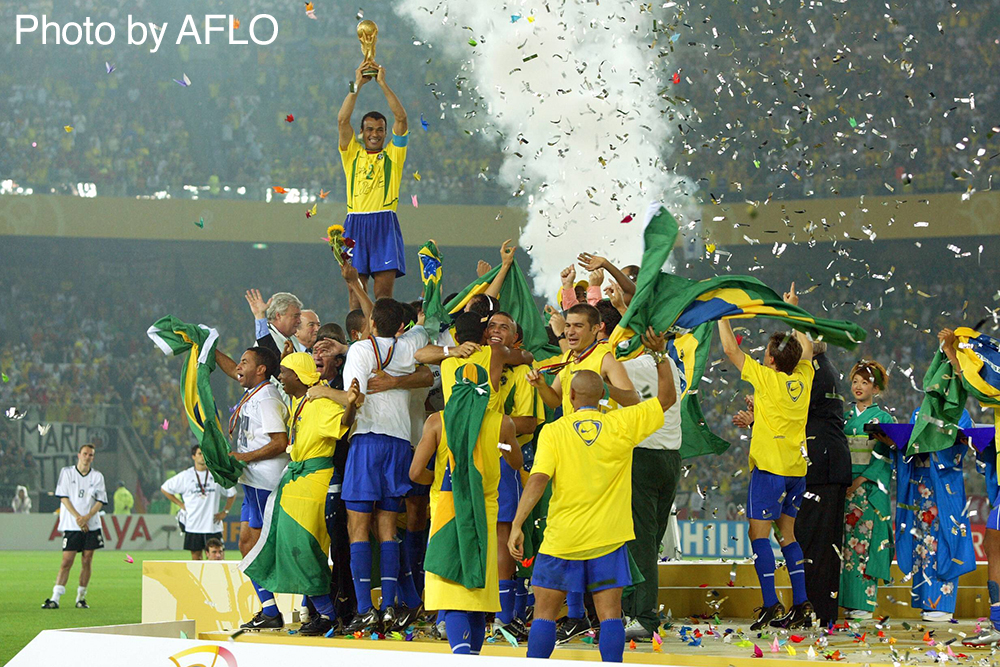
Brazil celebrates after winning the FIFA World Cup 2002 KOREA/JAPAN, June 30, 2002. (Photo by AFLO)
In 2002, the FIFA World Cup was hosted in Asia for the first time.
Japan and South Korea welcomed fans from around the world, creating one of the most memorable tournaments of the modern era. The competition had a major impact on soccer culture across Asia and helped increase the popularity of the sport throughout the region.
The atmosphere during the tournament was unforgettable.
Stadiums were filled with energy, city streets became gathering places for supporters, and millions of fans watched historic matches across both countries. For Japan especially, the tournament marked an important moment in the country’s soccer history.
Archive images from the 2002 World Cup capture not only the matches themselves, but also the excitement and emotion surrounding one of the most important sporting events ever held in Asia.
The Modern World Cup Era
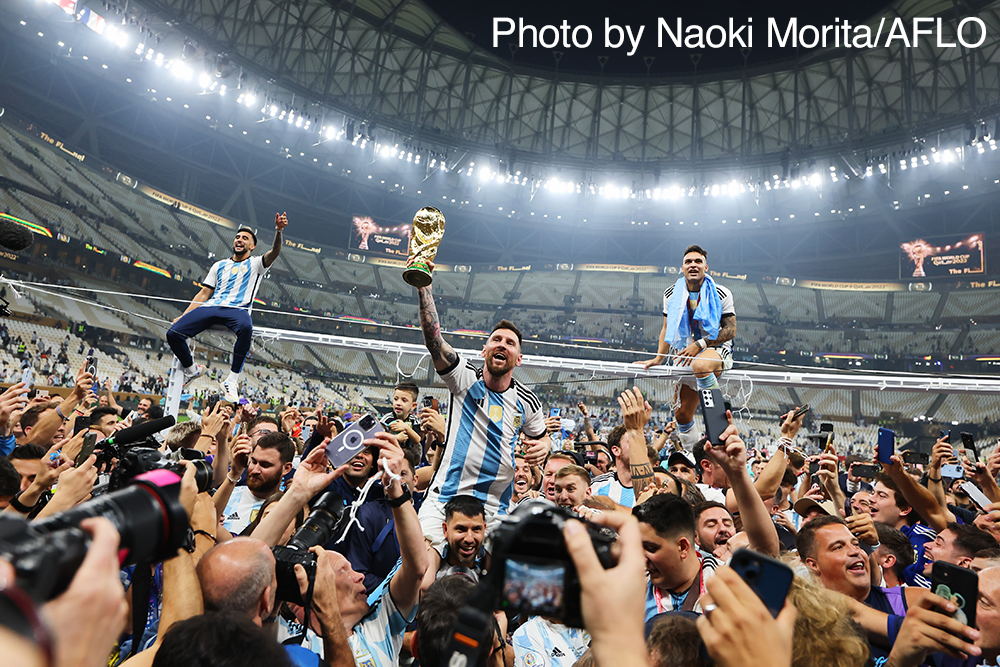
Argentina team celebrates after winning the FIFA World Cup Qatar 2022 final match against France, December 18, 2022. (Photo by Naoki Morita/AFLO SPORT)
Today, the FIFA World Cup is one of the most watched events in the world.
Modern tournaments bring together billions of viewers, massive stadiums, and some of the most famous athletes on the planet. Players like Lionel Messi and Cristiano Ronaldo have continued the tradition of the World Cup, creating global soccer icons.
At the same time, the tournament still produces the same emotions that defined earlier generations — joy, heartbreak, celebration, and national pride.
While technology and media coverage have changed dramatically over the decades, the atmosphere of the World Cup remains unique.
The photographs from each tournament preserve moments that soccer fans continue to remember long after the final whistle.
The Lasting Power of World Cup Photography
The FIFA World Cup has always been about more than soccer.
Across generations, the tournament has created moments that connect people around the world through sport. Historic victories, emotional defeats, legendary players, and passionate supporters have all become part of the World Cup’s visual history.
These archive photographs preserve not only famous matches and iconic athletes, but also the atmosphere and emotion that made each tournament unforgettable.
Even decades later, the images still capture the excitement of soccer’s greatest stage.