
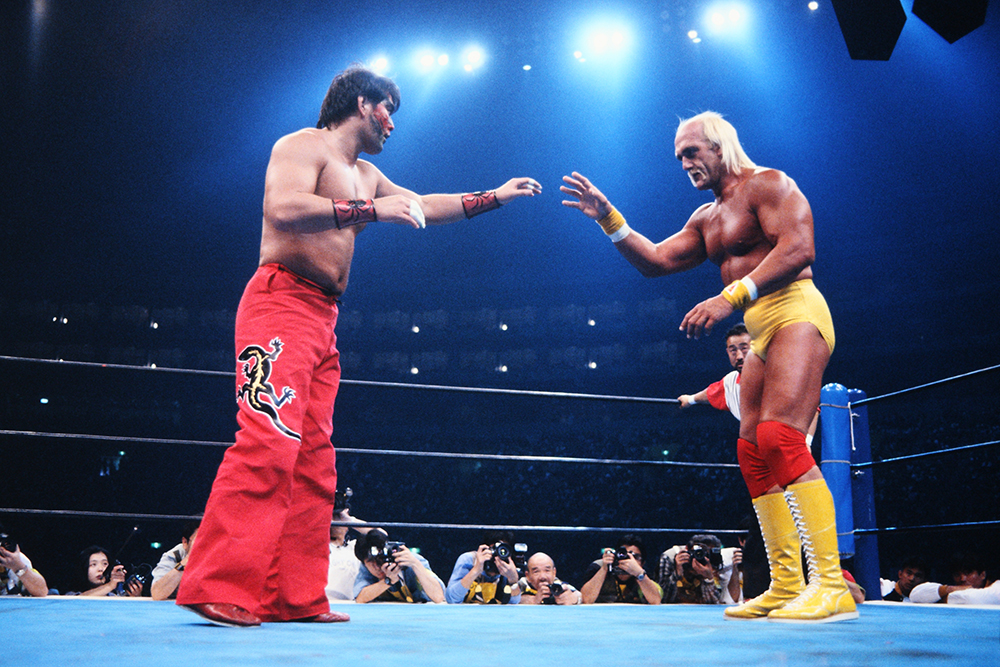





During the 1970s, 80s, and 90s, professional wrestling in Japan became something much bigger than simple entertainment.
Packed arenas, larger-than-life personalities, dramatic rivalries, and an intensity rarely seen anywhere else turned Japanese wrestling into a cultural phenomenon. Legendary figures like Antonio Inoki, Giant Baba, and Tiger Mask became national icons, while fans filled stadiums across the country to witness matches that felt physical, emotional, and unforgettable.
These archive photographs capture the atmosphere of that era — from sold-out arenas and championship moments to the photographers and fans who helped shape one of the most influential periods in wrestling history.
Table of Contents
The Rise of Japanese Wrestling
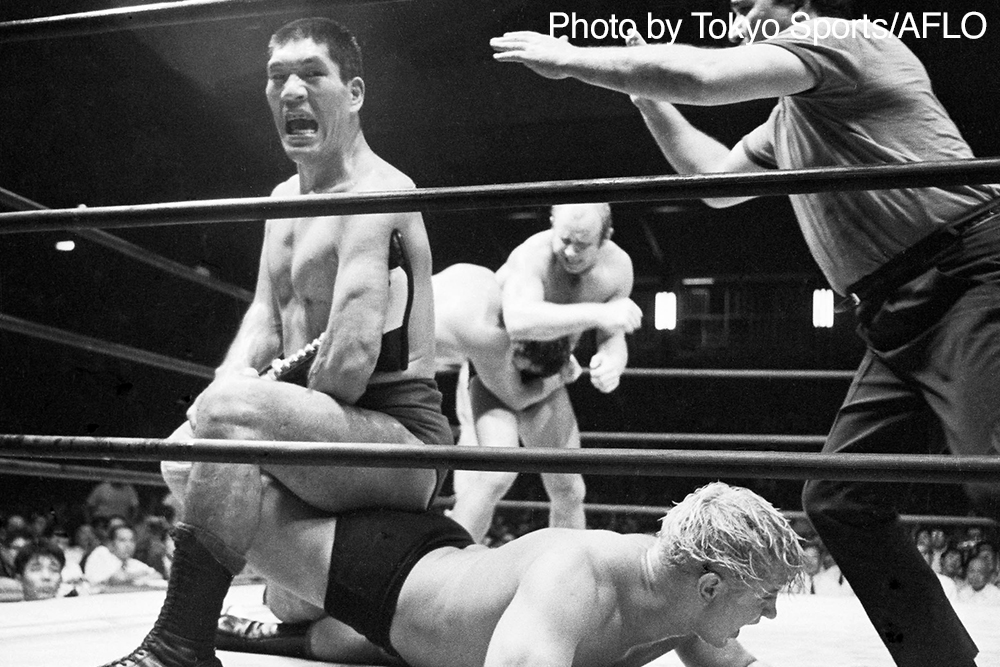
Giant Baba and Antonio Inoki vs Dory Funk Jr. and Terry Funk Tag Team Championship, August 4, 1970. (Photo by Tokyo Sports/AFLO)
Professional wrestling grew rapidly in Japan after World War II, influenced at first by American wrestling but quickly developing its own identity.
By the 1970s, wrestling had become one of the country’s most popular televised sports. Major events drew huge audiences, and wrestlers were treated less like entertainers and more like athletes and public figures.
The atmosphere inside arenas was different from what many people expected from wrestling. Crowds watched matches with intense focus, reacting to every strike, throw, and dramatic comeback. The energy was loud, emotional, and deeply connected to the personalities in the ring.
Photography from this era captures not only the action itself, but also the scale of wrestling’s popularity during its peak years.
Antonio Inoki and the Fighting Spirit Generation
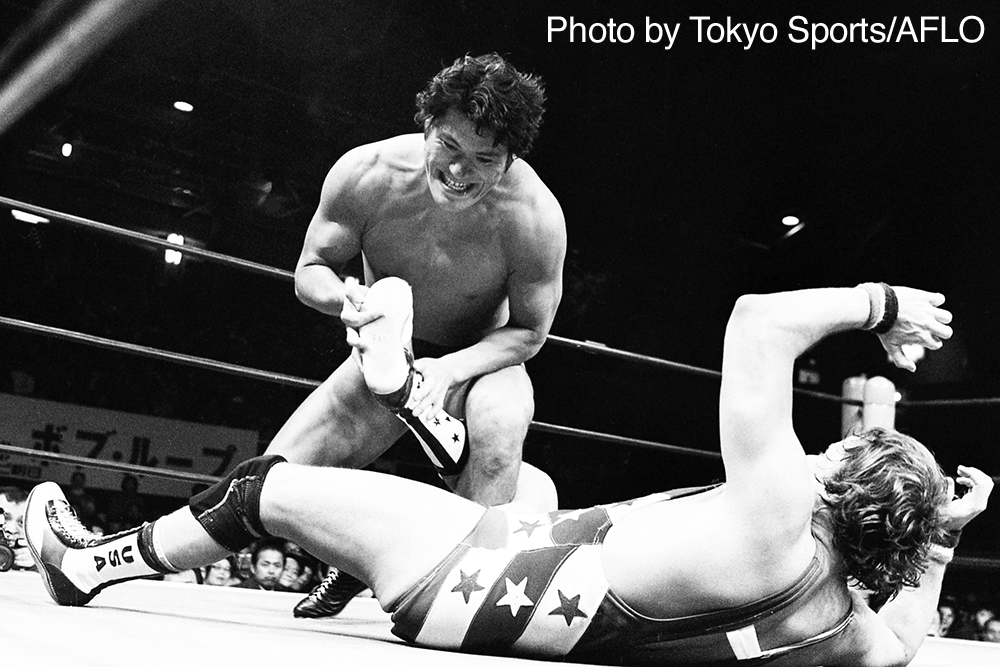
Antonio Inoki vs Bob Roop Inoki, January 12, 1979. (Photo by Tokyo Sports/AFLO)
No figure shaped Japanese wrestling more than Antonio Inoki.
With his serious expression, martial arts influence, and powerful charisma, Inoki became the face of an entire generation of wrestling fans. His matches often blurred the line between sports and entertainment, helping create a style that felt tougher and more realistic than many wrestling promotions elsewhere in the world.
Inoki’s influence went far beyond the ring.
He became a symbol of determination and discipline, inspiring athletes across combat sports and later influencing the rise of mixed martial arts. Even today, many modern wrestlers still reference his style and philosophy.
Archive photographs from this period show not only the intensity of his matches, but also the connection he had with audiences across Japan.
Giant Baba and the Heavyweight Era
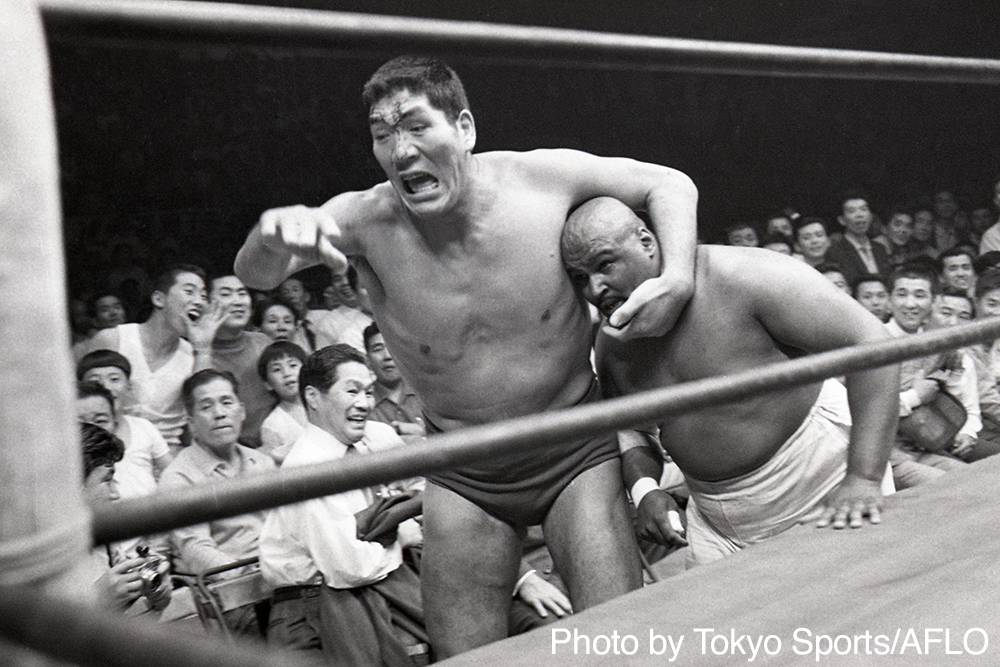
Giant Baba vs Abdullah the Butcher, May 19, 1971. (Photo by Tokyo Sports/AFLO)
While Inoki represented intensity and fighting spirit, Giant Baba brought a different presence to Japanese wrestling.
Standing over two meters tall, Baba became one of the most recognizable sports figures in Japan. His matches focused on atmosphere, pacing, and larger-than-life drama, helping establish the heavyweight style that defined wrestling during the 1970s and 80s.
As the founder of All Japan Pro Wrestling, Baba also helped build many of the rivalries and legendary matches that fans still remember today.
Photographs from this era often emphasize scale — crowded arenas, championship belts, towering wrestlers, and the theatrical feeling of major wrestling events before the digital age transformed sports entertainment.
Tiger Mask and a New Style of Wrestling
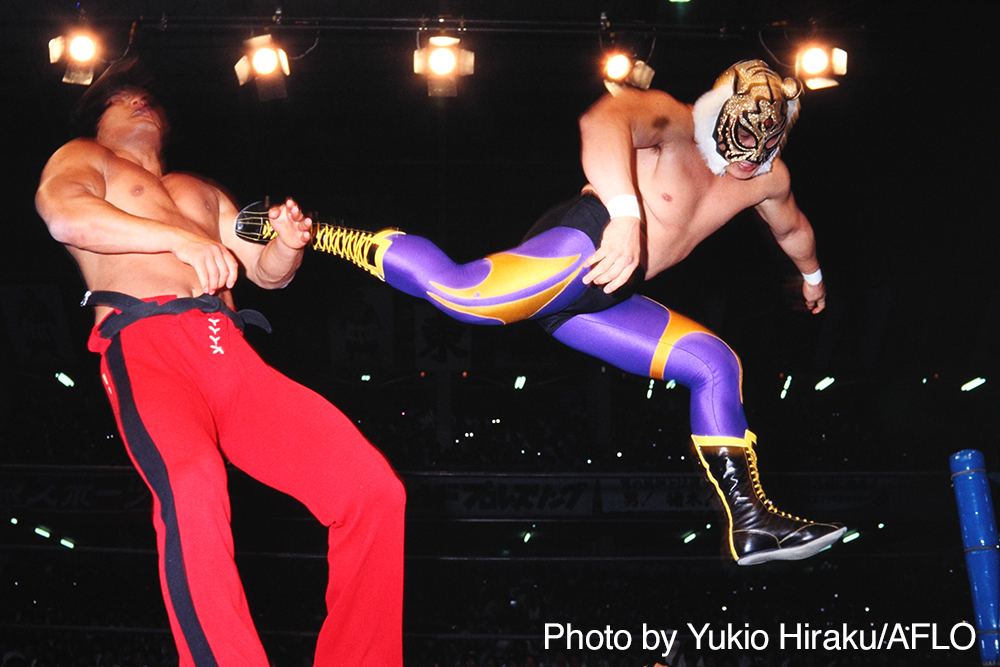
Original Tiger Mask (Satoru Sayama) vs Kuniaki Kobayashi, June 2, 1983. (Photo by Yukio Hiraku/AFLO)
In the early 1980s, Tiger Mask introduced something completely different.
Fast movement, aerial attacks, and explosive energy changed how many fans viewed professional wrestling. Matches became quicker and more athletic, inspiring a generation of wrestlers not only in Japan, but around the world.
The visual style of wrestling photography also changed during this time.
Photographers captured flying kicks, dives from the ropes, dramatic mid-air moments, and fast-paced sequences that were difficult to shoot in the era of film cameras. Many of these images still feel dynamic and modern decades later.
The influence of this style can still be seen today in wrestling promotions across the United States, Mexico, and Europe.
International Stars in Japan
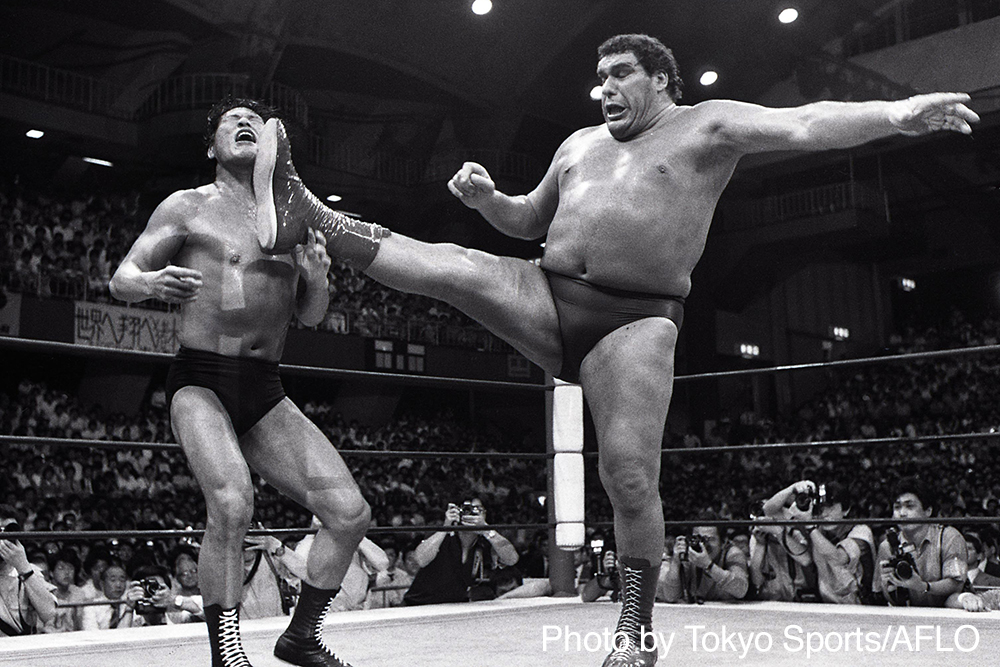
Andre the Giant vs Antonio Inoki, June11, 1985. (Photo by Tokyo Sports/AFLO)
One of the things that made Japanese wrestling so important during this period was its international reputation.
Many of the biggest wrestling stars from the United States and around the world came to Japan to compete against the country’s top wrestlers. For international athletes, wrestling in Japan carried a different kind of prestige. The crowds were passionate, the matches were physically demanding, and the level of competition was taken very seriously.
Foreign wrestlers became major stars in Japan during the 1970s and 80s. Names like Hulk Hogan, Stan Hansen, Bruiser Brody, Andre the Giant, and Ric Flair all competed in front of Japanese audiences, creating legendary rivalries and unforgettable matches alongside local icons such as Antonio Inoki and Giant Baba.
These international encounters helped turn Japanese wrestling into a global phenomenon. Fans were not only watching entertainment — they were watching clashes between some of the most famous athletes in the wrestling world.
Packed Arenas and Fan Culture
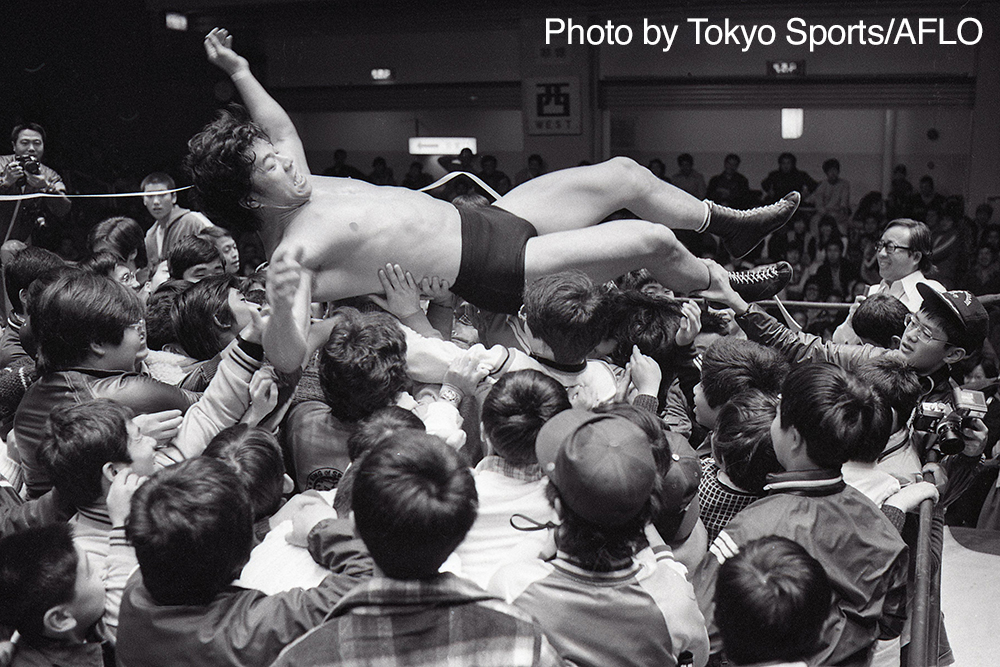
Fans carry Tatsumi Fujinami after a send-off match at Korakuen Hall in Tokyo, January 7, 1979. (Photo by Tokyo Sports/AFLO)
During the golden era of Japanese wrestling, the crowds were just as important as the wrestlers themselves.
Fans packed venues ranging from local gymnasiums to massive stadiums like the Tokyo Dome. Wrestling magazines filled convenience stores, television broadcasts attracted huge audiences, and posters of famous wrestlers appeared across cities throughout Japan.
These archive photographs reveal details that often disappear over time — handmade fan signs, old arena lighting, vintage merchandise, ringside photographers shooting on film, and the atmosphere of major events before smartphones and social media changed live sports forever.
Looking back at these images now, there is a strong sense of physical presence. Fans experienced wrestling directly, inside loud arenas filled with anticipation, smoke, camera flashes, and crowd reactions.
Wrestling Photography Before the Digital Era
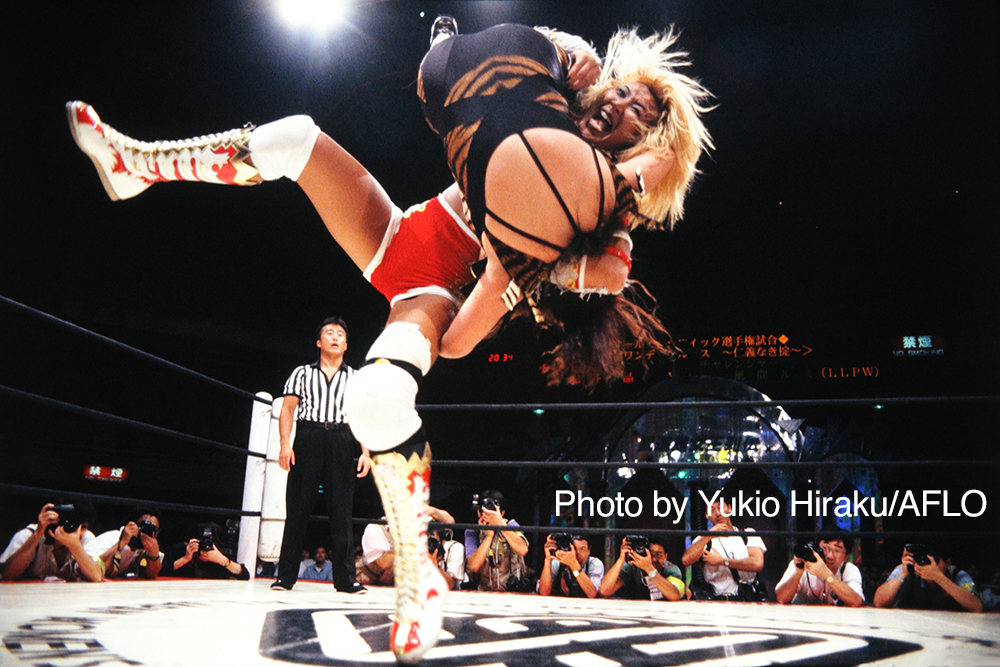
Photographers capturing Akira Hokuto vs Rumi Kazama, August 25, 1993. (Photo by Yukio Hiraku/AFLO)
Sports photography in the 1970s and 80s required timing, instinct, and patience.
Photographers worked with film cameras under difficult lighting conditions, often capturing fast action with limited shots available. Ringside photographers had to anticipate the exact moment a wrestler would jump, strike, or react emotionally.
That challenge gave many wrestling photographs from this era a raw and dramatic feeling.
Sweat flying through arena lights, blurred motion inside the ring, exhausted wrestlers after long matches, and emotional crowd reactions all became part of the visual identity of Japanese wrestling during its peak years.
Today, these images preserve not only famous matches, but also the atmosphere of live sports before the digital era transformed photography itself.
The New Japan Pro Wrestling
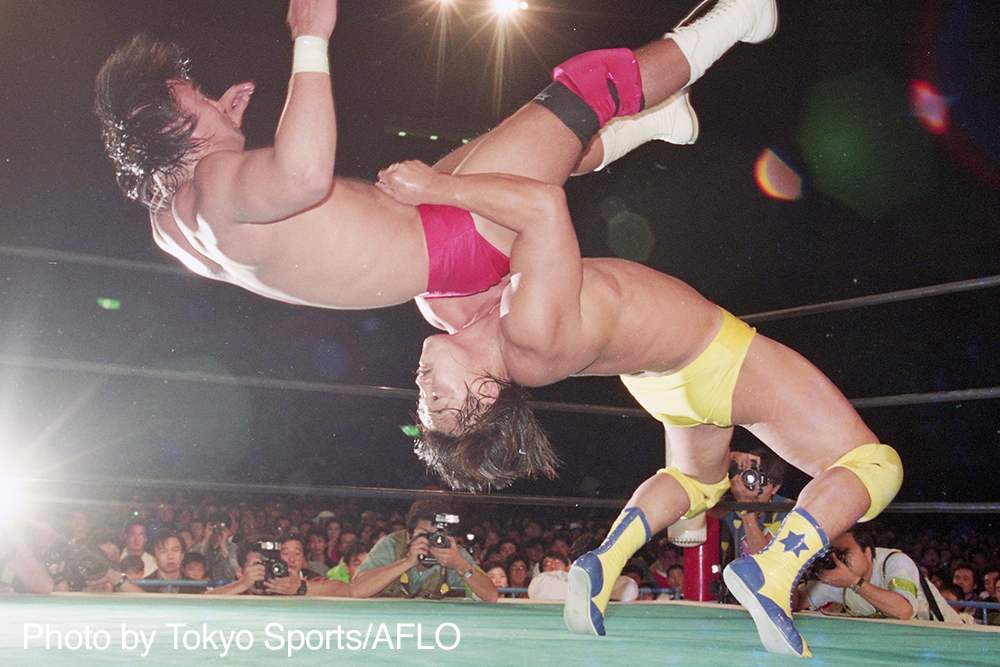
German Suplex Hold by Hase on Keiji Mutoh, October 25, 1990. (Photo by Tokyo Sports/AFLO)
No discussion of Japanese wrestling history would be complete without New Japan Pro Wrestling.
Founded by Antonio Inoki in 1972, it became one of the most influential wrestling organizations in the world. Known for its intense matches, athletic style, and strong focus on fighting spirit, New Japan helped shape the identity of Japanese wrestling for generations of fans.
Many legendary wrestlers passed through its rings over the decades, and its influence can still be seen today across modern wrestling promotions worldwide.
The archive photographs from this era capture the rise of New Japan during some of its most important years — packed arenas, iconic rivalries, championship moments, and the atmosphere that helped make Japanese wrestling internationally respected.
Even today, New Japan Pro Wrestling remains one of the defining names in global professional wrestling, connecting modern audiences to the legacy of the sport’s golden era.
The Legacy of Japan’s Wrestling Boom
The influence of Japanese wrestling can still be seen everywhere today.
Modern wrestling promotions around the world continue to borrow ideas developed during this era — harder-hitting matches, athletic movement, long-form storytelling, and cinematic presentation inside the ring.
For many fans, the 1970s through the 1990s remain the defining period of Japanese wrestling history.
These archive photographs capture more than victories and championships. They preserve the atmosphere of packed arenas, the personalities that shaped an industry, and the energy of a period when professional wrestling in Japan reached extraordinary popularity.
Even decades later, the images still carry the intensity of that time.
Check out our whole pro wrestling collection at this link.