
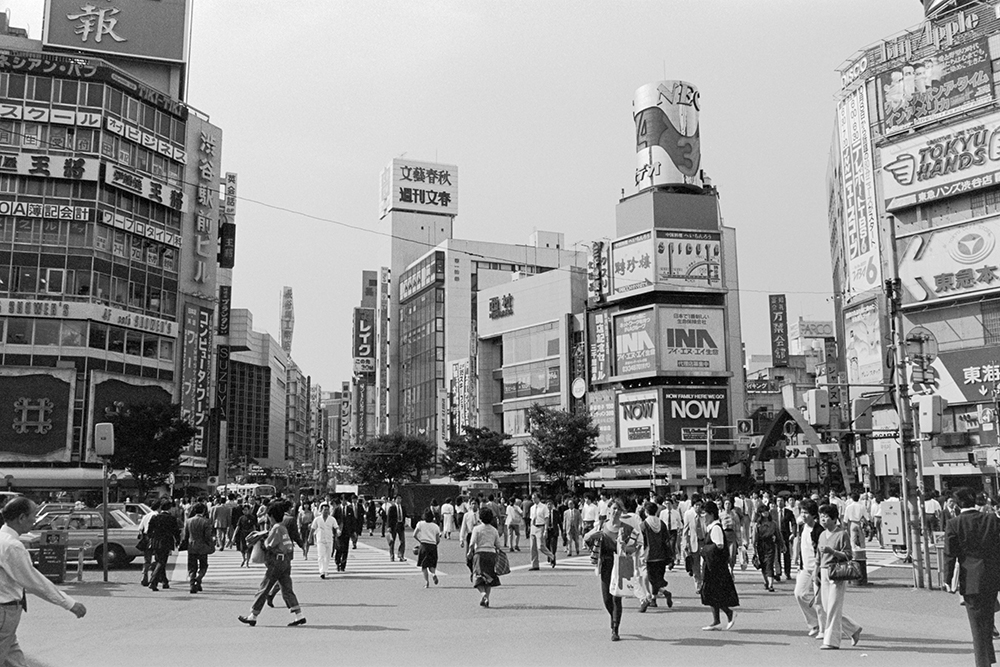





Tokyo in the 1980s felt different.
The city was loud, crowded, bright, and full of energy. Neon signs covered entire buildings. Trains were packed every morning. Young people gathered in Harajuku wearing styles that looked completely new at the time. Salarymen filled the streets late into the night after work. Everywhere you looked, Tokyo felt like it was moving forward.
This was the peak of Japan’s bubble economy, a period of rapid growth and optimism that changed the country forever.
These archive photographs capture moments from that era — not just the famous landmarks, but the everyday atmosphere of Tokyo before smartphones, social media, and digital life changed the way people experienced the city.
Table of Contents
Tokyo Before Smartphones
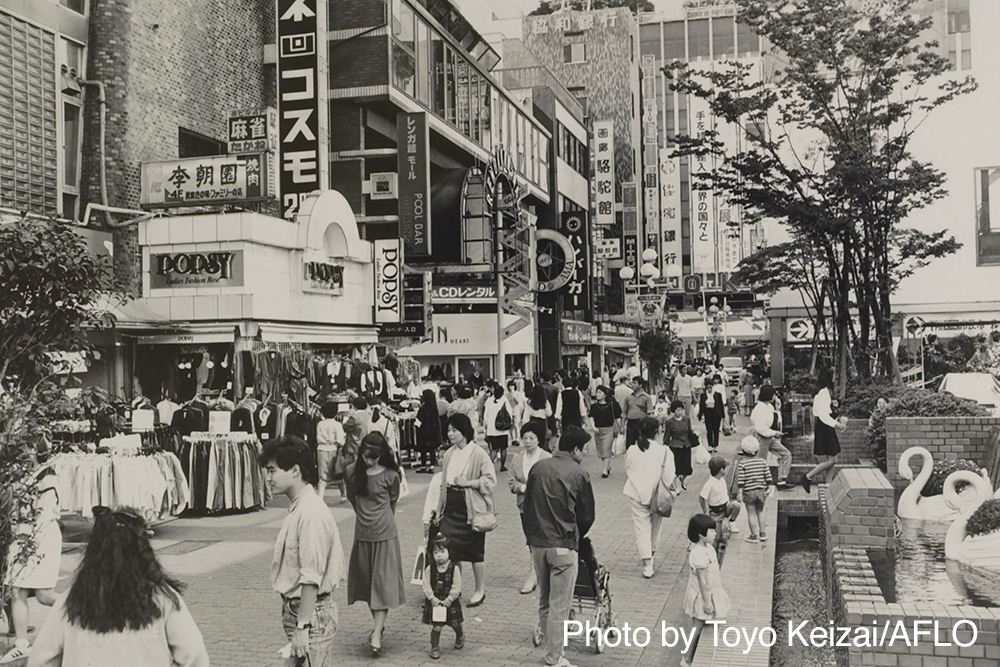
Kichijoji area in the 1980s, Tokyo (Photo by Toyo Keizai/AFLO)
In the 1980s, Tokyo was still a fairly analog city.
People used payphones to make plans. Train commuters read newspapers and magazines instead of looking at screens. Music came from cassette tapes and record stores. Storefronts were covered in printed signs, handwritten menus, and glowing neon lights.
The streets felt visually dense in a way that is hard to describe today.
Even places that still exist — Shibuya, Shinjuku, Ginza — looked very different. The city had fewer giant digital displays and more layers of signs, posters, and physical advertisements competing for attention.
Tokyo communicated through paper, neon, and noise.
Neon Nights and the Bubble Economy
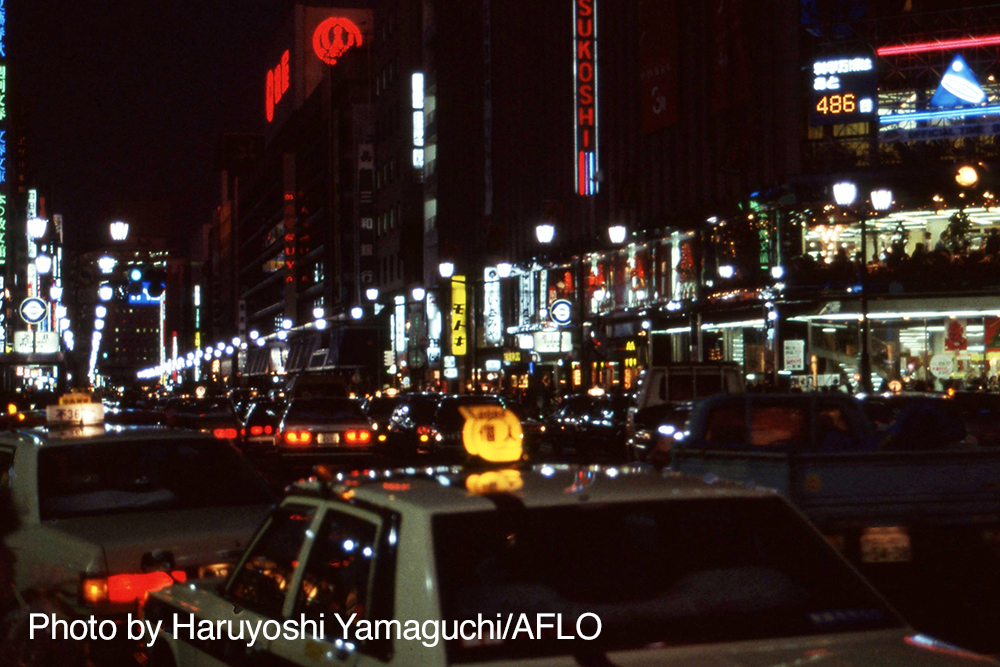
December, 1983, Tokyo, Japan – Tokyo’s Ginza is brightly lit by colorful neon signs at night. (Photo by Haruyoshi Yamaguchi/AFLO)
During the 1980s, Japan’s economy was booming.
Tokyo became a symbol of wealth, speed, and modern life. Office workers filled the business districts during the day, while nightlife districts like Shinjuku and Ginza stayed busy late into the night.
The city glowed after dark.
Rain reflecting neon lights on wet streets became one of the defining images of Tokyo during this period. Small bars, crowded izakaya, taxis lined up outside train stations, and endless streams of people moving through the city created an atmosphere that photographers around the world became fascinated with.
Many of the visual ideas people now associate with “cyberpunk” cities were inspired directly by Tokyo during this era.
But beyond the neon and excess, these photographs also show ordinary routines — people waiting for trains, smoking outside offices, eating dinner after work, or simply walking home through crowded streets.
Harajuku and Youth Culture
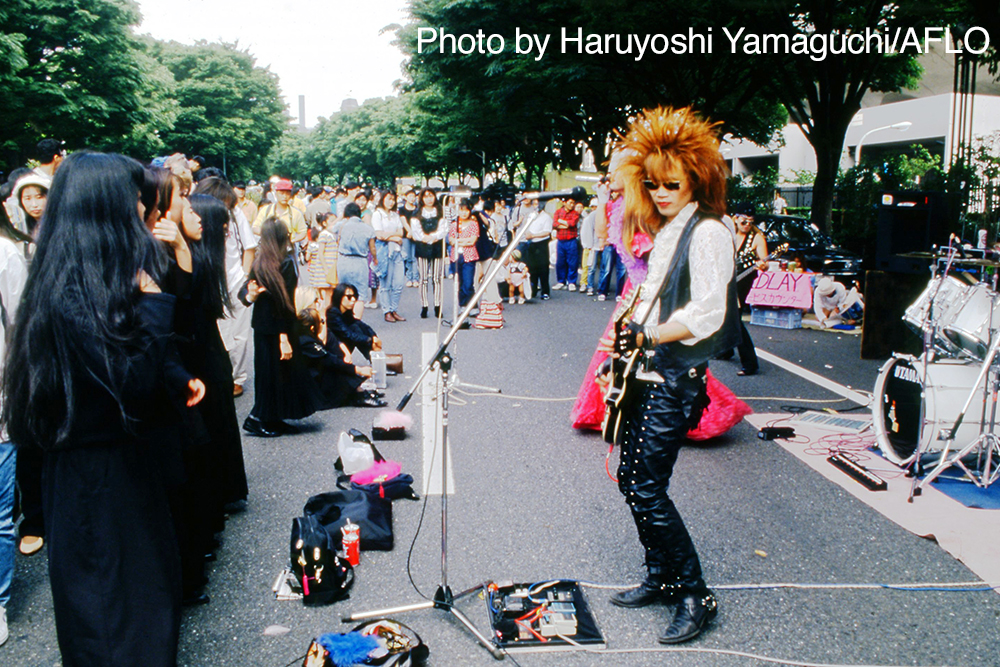
Young musicians performing in Harajuku. (Photo by Haruyoshi Yamaguchi/AFLO)
One of the most interesting parts of the 1980s Tokyo was the rise of youth culture.
Harajuku became a meeting place for young people experimenting with fashion, music, and identity. Long before Instagram or TikTok, trends spread through the streets themselves.
One of the most famous groups from this time was the Takenoko-zoku.
These dance groups gathered around Harajuku and Yoyogi Park wearing colorful costumes and performing choreographed routines to pop music. At the time, they represented a new kind of youth culture that felt rebellious, energetic, and uniquely Japanese.
Today, Harajuku is known around the world for street fashion, but many of those ideas started during this period.
Looking back at these photographs now, what stands out most is how personal everything feels. Fashion was not created for social media. It existed in the moment, on the streets, surrounded by music, friends, and the energy of the city itself.
The Salaryman Era
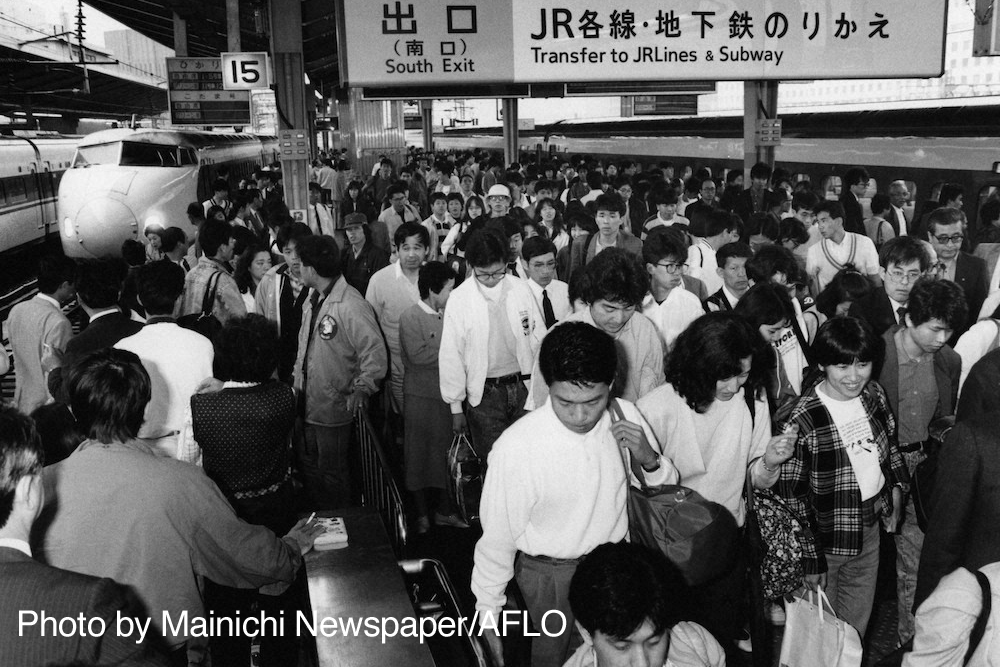
JR Tokyo Station crowded with passengers. (Photo by Mainichi Newspaper/AFLO)
The 1980s were also defined by work culture.
Every morning, trains carried huge numbers of office workers into central Tokyo. Business districts like Marunouchi and Shimbashi became symbols of Japan’s economic rise.
The image of the Japanese salaryman became internationally recognized during this period.
Long hours, crowded commutes, late-night drinking sessions, and strong company loyalty shaped daily life for many workers. Photographs from the time often show rows of dark business suits moving through stations and intersections like part of the city’s rhythm itself.
Tokyo moved fast, and much of that speed came from the people working inside it every day.
The Streets of Showa-Era Tokyo
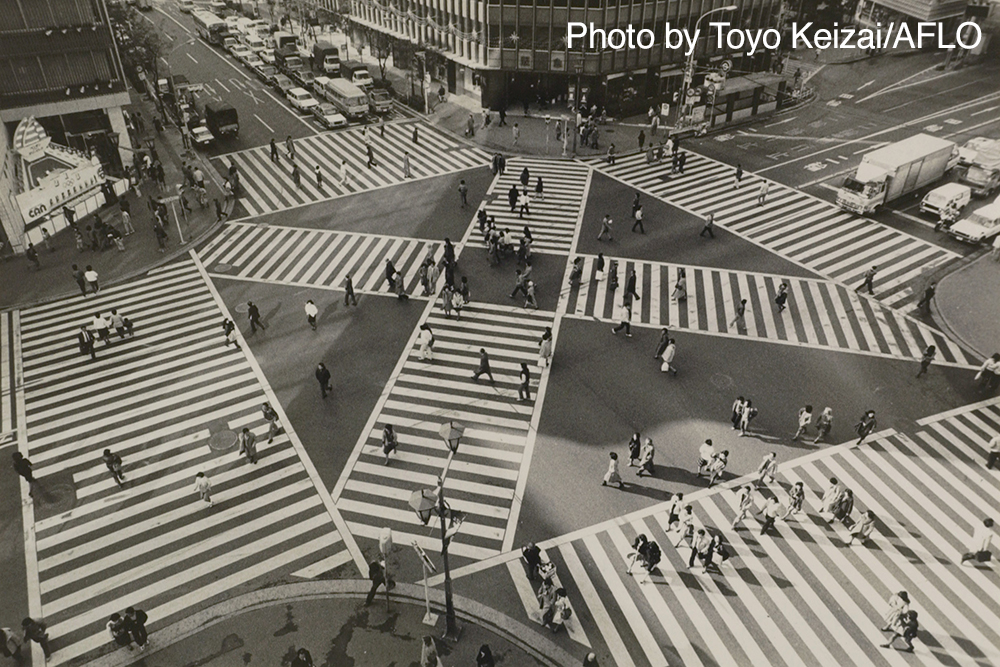
Sukibayashi intersection in 1983, Tokyo (Photo by Toyo Keizai/AFLO)
What makes old photographs of Tokyo so fascinating today is often the small details.
Old taxis and cars. Retro vending machines. Hand-painted shop signs. Arcade machines. Department store advertisements. Cigarette smoke drifting through tiny alleyways filled with restaurants.
The city felt physically layered.
Even the typography and graphic design of the time created a unique atmosphere that still influences films, games, photography, and design today.
Many visitors who come to Japan now still search for traces of this older Tokyo — the version of the city that existed before redevelopment, smartphones, and modern digital advertising changed the urban landscape.
Some neighborhoods still hold fragments of that era, but much of it has already disappeared.
Everyday Life Beyond the Neon
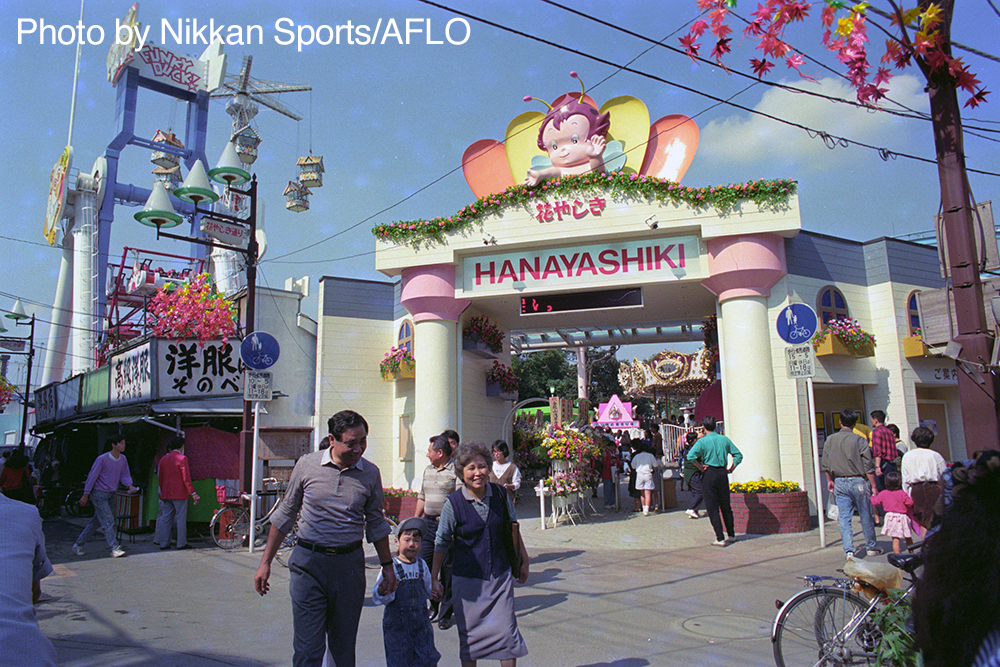
Hanayashiki amusement park in the 1980s, Tokyo (Photo by Nikkan Sports/AFLO)
Not every part of Tokyo in the 1980s looked futuristic.
Away from the entertainment districts, daily life was often quiet and familiar. Local shopping streets, residential neighborhoods, small family restaurants, school children walking home; bicycles lined up outside stations — these ordinary moments are just as important as the famous neon scenes.
That is one of the reasons archive photography matters.
It preserves not only major historical events, but also the atmosphere of everyday life. The small details that people rarely think of documenting at the time often become the most valuable years later.
Why These Photos Still Matter
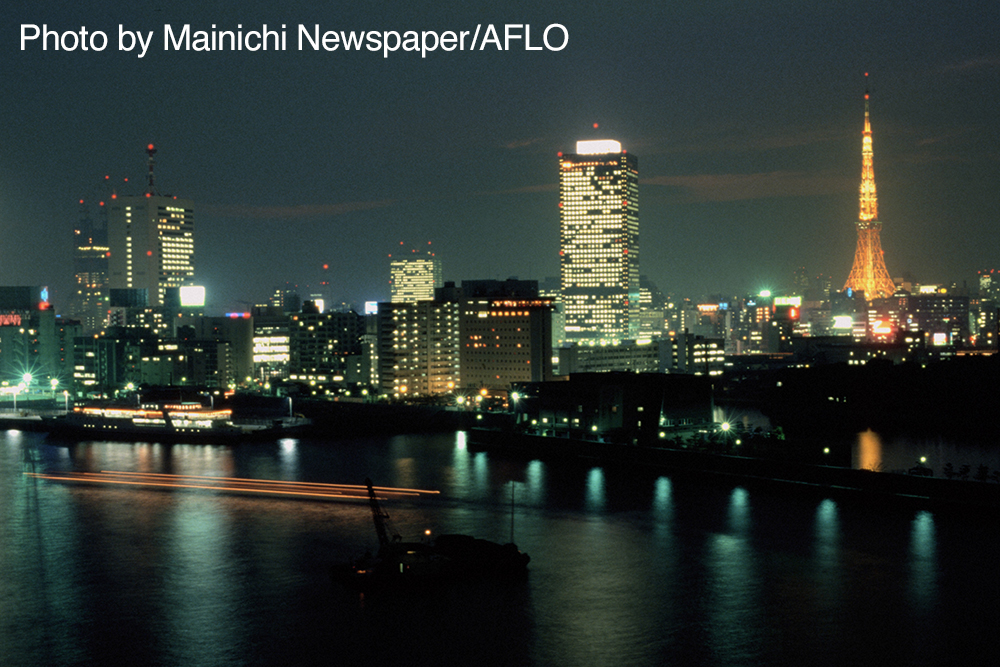
Tokyo Tower and night view of the city. (Photo by Mainichi Newspaper/AFLO)
Tokyo changes constantly.
Buildings disappear. Neighborhoods are rebuilt. Storefronts close. Entire streets can look completely different within a few years.
These photographs preserve a version of the city that can no longer be experienced in the same way.
For many people today, there is a growing fascination with Showa-era Japan and the atmosphere of the 1980s. Part of that comes from nostalgia, but part of it also comes from the feeling that cities were experienced more directly before digital life took over everyday routines.
The Tokyo captured in these archive images feels physical, unpredictable, and intensely human.
And that is exactly what makes these photographs so powerful today.
If you would like to explore more photographs from this era, you can browse our full collection of 1980s Tokyo and Japan archive imagery here: Aflo Images 1980s Archive Collection. The archive includes rare editorial photographs capturing everyday life, fashion, nightlife, sports, and the changing streets of Japan during the Showa era.